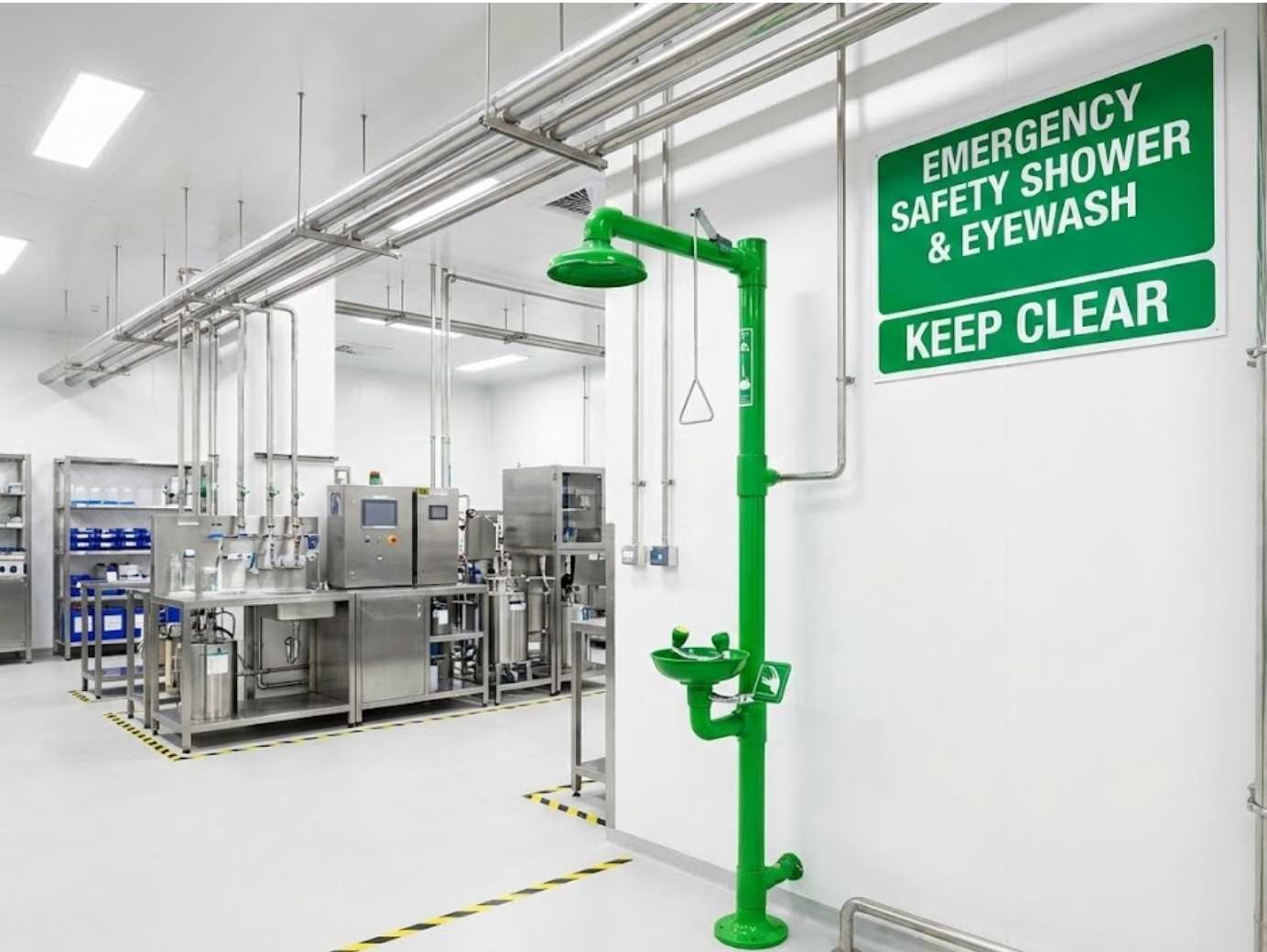
One of the most important yet unnoticeable elements of workplace safety equipment used in areas where chemicals or other hazardous substances are being worked with is an emergency safety shower. Nevertheless, the most efficient systems may become ineffective when they are not installed or maintained properly.
In this blog, we will discuss some of the common mistakes that can make these emergency showers ineffective and how to address them before they cause the workers any harm.
1.Ineffective Positioning and Availability
Mistake
Most of the facilities locate the safety showers too deep into the hazard zone or behind the wall, doors, equipment, or shelves so that they become inaccessible at the time of an emergency.
The Fix
Placing the unit in a straight, unobstructed line of sight and an easily accessible area. Label it with conspicuous signage and make the surroundings well illuminated.
2. Improper Water Temperature.
The Mistake
Shock, scalding or hypothermia can be experienced when cold or hot water is used. This makes the employees unwilling to spend the entire fifteen minutes needed to flush the contaminants under the shower.
The Fix
Fitting an anti-tempering or thermostatic mixing valve will guarantee a medium water flow, preferably 16 degrees C to 38 degrees C. Outdoor models are insulated and heated, which is a beneficial feature in colder areas of Australia or outdoors.
3. Absence of Periodic Testing and Maintenance.
The Mistake
Most organisations do not remember that such units should be checked often. An untested shower can have a low temperature, a blockage of the head, or stagnant water that is contaminated.
The Fix
Do a weekly test of the activation to verify the regular water flow and temperature. Plan a complete annual checkup with every check being documented in a maintenance log. The employees are to be educated to report any malfunction.
4. Working with Non-Conforming or Under-Quality Equipment.
The Mistake
Inexpensive non-conforming products do not have the capacity to provide sufficient water flow or pressure. This malpractice may result in penalties and, more importantly, serious injuries.
The Fix
Select the equipment that complies with the Australian Standards (AS 4775) and ANSI Z358.1. Quality suppliers such as emergency safety shower systems by the Spill Station, Australia give performance and durability-tested designs that are compliant.
5. Ignoring Employee Training
The Mistake
Despite the availability of the equipment, employees who are not trained can panic or utilize the shower in an unorthodox manner, thus wasting precious time.
The Fix
Add emergency shower exercises to your periodic safety-training program. All the workers must be told where the closest shower is, how to turn it on, and what to do after exposure.
Summary
Good emergency showers save lives, but they must be properly stacked and must work properly. One of the most important concerns linked to compliance and workers’ safety is the avoidance of errors like improper positioning, inappropriate water temperature, inadequate maintenance, and inadequate training