Defence technology is no longer a market that civilian founders avoid. It is one of the fastest-growing categories in venture capital in 2026, attracting some of the most serious investors in Silicon Valley, London, Tel Aviv, and Sydney. The global defence technology market is projected to exceed $1 trillion by 2030. Governments that spent decades buying exclusively from established prime contractors are now actively seeking startups that can deliver capability faster, cheaper, and more innovatively than legacy systems. This guide tells founders what they need to know to build in this space. Follow startup news and guides at Startup Pill.
Why Defence Tech Is the Fastest-Growing Startup Category in 2026
Three structural forces are driving defence technology investment to record levels in 2026.
Geopolitical context. Russia’s invasion of Ukraine, tensions in the Taiwan Strait, and instability across multiple regions have forced governments that reduced defence spending after the Cold War to rebuild capabilities urgently. The urgency creates procurement demand that established defence contractors — with their 10-year development cycles and cost-plus contract structures — cannot satisfy at the required speed.
Technology disruption. Autonomous systems, artificial intelligence, advanced software, and commercial satellite infrastructure are changing what military capability means. A $500 commercial drone with an AI targeting system can perform functions that a $10 million military helicopter performed a decade ago. Startups building these capabilities have structural cost advantages over traditional defence contractors.
Government procurement reform. The US Department of Defense, the UK Ministry of Defence, and equivalent agencies in Australia, Canada, and NATO member states have all created new procurement pathways specifically designed to bring commercial startups into the defence supply chain faster. The US SBIR programme, the UK Defence and Security Accelerator, and Canada’s new Defence Drone Initiative Marketplace are explicit mechanisms for routing government contracts to early-stage companies. Read every startup funding guide at Startup Pill.
The Seven Most Fundable Defence Startup Categories
Autonomous drones and uncrewed systems are the defining technology of modern conflict. The Ukraine war has demonstrated that low-cost autonomous drones can neutralise expensive armoured vehicles, monitor vast geographic areas, and deliver precision strikes without risking human pilots. Every NATO member is now building a drone acquisition programme. Canada’s Defence Drone Initiative Marketplace has created a network of nearly 400 approved Canadian drone suppliers with initial contracts worth $50 million. The commercial opportunity for drone startups has never been larger.
Cybersecurity is the category where civilian startup skills translate most directly to defence requirements. Nation-state cyber attacks on critical infrastructure, government systems, and defence networks are a daily reality in 2026. Governments need the same advanced threat detection, zero-trust architecture, and AI-powered security operations that enterprise companies need — but with the security clearance and compliance requirements that civilian cybersecurity products often cannot satisfy. Defence-grade cybersecurity startups with cleared personnel command premium contract values.
AI and machine learning for intelligence analysis represents one of the largest unmet capability gaps in military operations. Processing satellite imagery, intercepted communications, and open-source intelligence at scale requires AI systems that outperform human analysts. Startups like Palantir, Primer AI, and dozens of smaller companies are building the AI analysis infrastructure that defence intelligence agencies are deploying at scale.
Counter-drone systems — the technology that detects, tracks, and neutralises hostile drones — are in critical shortage globally. Every drone threat creates demand for a counter-drone solution. The detection and neutralisation market is growing as fast as the drone market itself. Startups building radar systems, RF jamming devices, directed energy weapons, and kinetic interceptors for drone threats are attracting significant government and commercial investment.
Satellite communications and space-based intelligence have been transformed by commercial space companies. The ability to launch small satellites cost-effectively has created a commercial space infrastructure that military organisations are integrating into their operational planning. Startups building smallsats, satellite imagery analytics, and space-based communications systems for defence customers operate in a market with government anchor contracts and commercial applications simultaneously.
Logistics and supply chain technology for military operations is one of the least glamorous but most commercially significant defence technology categories. Military logistics — moving equipment, fuel, food, ammunition, and personnel at scale across complex operating environments — is one of the most technology-deficient areas of military operations. AI-powered logistics optimisation, autonomous ground vehicles for supply delivery, and predictive maintenance systems for military equipment are categories where civilian startup skills apply directly to defence needs.
Directed energy weapons — lasers and high-power microwave systems — have moved from research projects to procurement programmes in 2026. The US Army, Navy, and Air Force all have active directed energy weapon programmes. The UK has deployed the DragonFire laser system. The cost-per-shot advantage of directed energy weapons over kinetic missiles is compelling for defence planners managing ammunition supply chains. Follow defence tech startup news at Startup Pill.
Dual-Use Technology. The Smart Founder’s Entry Point.
The most commercially successful defence technology startups are dual-use companies — organisations that build technology with genuine commercial applications and genuine defence applications simultaneously. SpaceX is dual-use. Palantir is dual-use. Anduril is the exception — a pure-play defence technology company — but even Anduril has commercial applications for its autonomous surveillance systems.
Dual-use positioning serves three strategic purposes for founders. It allows the company to raise from civilian venture investors who might be uncomfortable with a pure defence mandate. It creates two revenue streams — commercial and government — that reduce customer concentration risk. And it allows the company to prove technology in the commercial market, where development cycles are faster, before adapting that proven technology to defence requirements.
Drone companies that start in agricultural monitoring, infrastructure inspection, or emergency services build operational experience, supply chains, and regulatory clearances that transfer directly to defence applications. Cybersecurity companies that start serving financial services clients build the security engineering depth that defence agencies require. The dual-use path is not a compromise. It is frequently the fastest route to a significant defence contract.
How Defence Startups Get Their First Government Contract
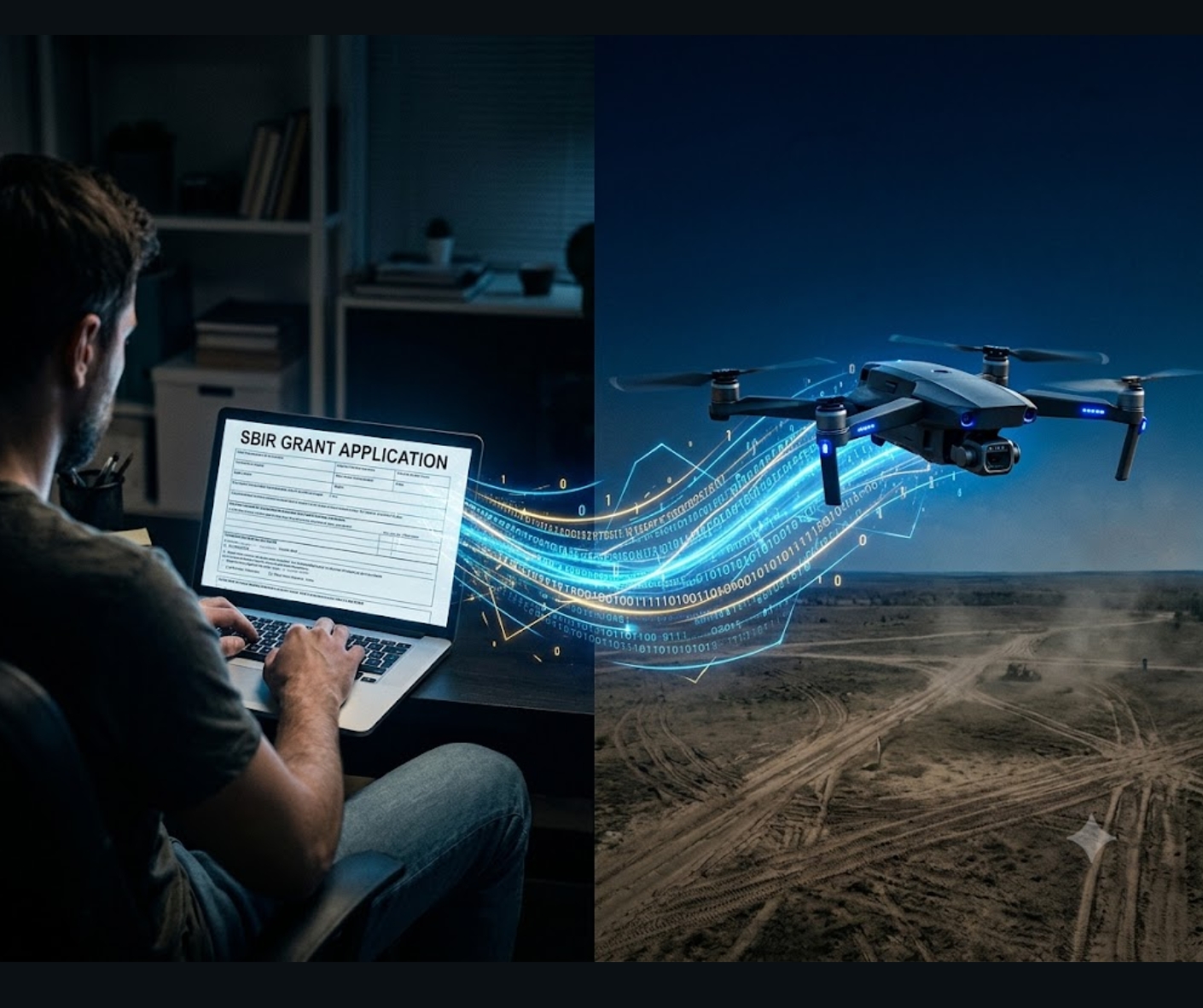
The SBIR and STTR programmes in the United States provide non-dilutive Phase I contracts of $150,000 to $275,000 to early-stage companies demonstrating technology with defence applications. Phase II contracts of up to $1.7 million follow successful Phase I work. A Phase II SBIR award is the clearest possible signal to venture investors that a defence agency has validated the technology — and that further government spending will follow.
The UK Defence and Security Accelerator runs open calls for proposals on specific capability challenges and awards contracts of £30,000 to £3 million to startups that respond with viable solutions. The process is faster than traditional MOD procurement and explicitly targets companies that have never previously worked with the defence sector.
Other Transactions Authority contracts in the US — known as OTAs — allow the Department of Defense to contract with companies that have never previously won government contracts, bypassing the FAR procurement regulations that make traditional defence contracts inaccessible to startups. OTAs have been the primary procurement mechanism for companies like Anduril, Shield AI, and dozens of other defence technology startups. Follow startup funding and grant guides at Startup Pill.
Key Takeaways for Defence Tech Founders
Defence technology is the fastest-growing startup category in 2026 with government procurement demand that established contractors cannot satisfy at the required speed. The seven most fundable categories are autonomous drones, cybersecurity, AI intelligence analysis, counter-drone systems, satellite communications, military logistics, and directed energy weapons. Dual-use positioning — technology with simultaneous commercial and defence applications — is the most successful founding strategy. First government contracts come through SBIR grants in the US, DASA in the UK, and OTA contracts that bypass traditional FAR procurement. The Canada-Ukraine drone deal announced in September 2026 demonstrates that governments are now willing to move at startup speed to acquire capability from commercial companies.
Frequently Asked Questions
What types of defence startups attract the most funding in 2026?
Autonomous drones, cybersecurity, AI intelligence analysis, counter-drone systems, and satellite communications are the five categories attracting the most venture and government investment in defence technology in 2026.
What is a dual-use defence startup?
A dual-use defence startup builds technology with genuine applications in both commercial markets and defence/military markets simultaneously. Examples include drone companies that serve agriculture and defence, cybersecurity companies serving financial services and government, and satellite companies with commercial and military customers. Dual-use positioning allows civilian VC investment while building toward government contracts.
How does a startup win its first defence contract?
In the US, SBIR Phase I contracts of $150,000 to $275,000 are the most accessible entry point. In the UK, the Defence and Security Accelerator DASA runs open calls with contracts up to £3 million. In the US, Other Transactions Authority contracts allow companies without prior government experience to win DoD contracts outside the FAR procurement system.
Where can I find more startup guides and funding resources?
Find comprehensive startup guides, funding resources, and industry insights at Startup Pill — updated every week for founders at every stage.