Energy is the largest industry on earth. It is also the industry with the most capital flowing into startups in 2026. More than $500 billion in clean energy investment was deployed globally in 2025, according to BloombergNEF. A significant and growing portion of that capital is going into early-stage companies building the technologies that will define how the world generates, stores, distributes, and consumes energy for the next century. This is the guide every energy founder needs to understand that landscape. Follow startup news and funding guides at Startup Pill.
Why Energy Startups Are Different From Every Other Category
Energy startups are not SaaS companies. The rules that govern software startup building — move fast, iterate quickly, deploy to millions of users digitally — do not apply to companies building solar panels, battery systems, nuclear reactors, or grid management infrastructure. Energy startups face three specific challenges that most startup advice ignores.
First, capital intensity. A software startup can reach $1 million in ARR with $500,000 in seed capital. An energy startup building physical hardware may need $10 million before it has a deployable product. This means energy startups need investors who understand long development timelines and are comfortable with capital-intensive unit economics.
Second, regulatory complexity. Every energy startup operates within a regulatory environment shaped by federal policy, state utility commissions, interconnection rules, and international trade agreements. A solar manufacturer faces tariffs. A battery company faces hazardous materials regulations. A nuclear startup faces NRC licensing. Understanding the regulatory environment is not optional for energy founders.
Third, customer sales cycles. Selling to a utility company takes 24 to 36 months. Selling to a large commercial real estate operator takes 12 to 18 months. Energy startups cannot rely on the short enterprise sales cycles that software companies build financial models around. Read every startup guide at Startup Pill.
The Six Most Fundable Energy Startup Categories in 2026
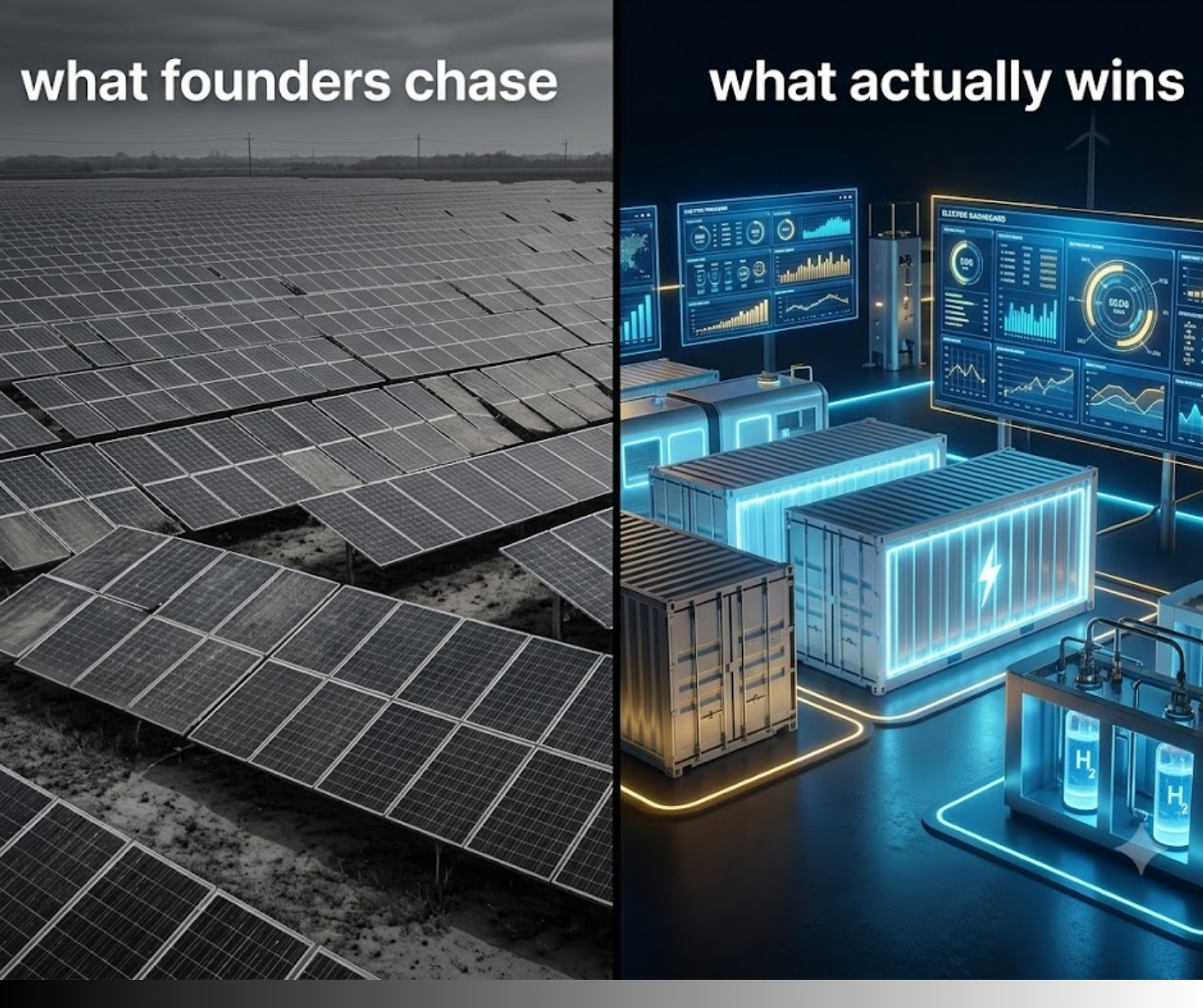
Solar technology continues to attract significant venture investment, but the category has matured. The most fundable solar startups in 2026 are not building conventional silicon panels. They are building perovskite solar cells, bifacial modules, building-integrated photovoltaics, and flexible solar materials like the third-generation technology Xingyi Core Energy is developing in China. The commercial opportunity is not in the panels themselves — it is in the applications where conventional silicon panels cannot be deployed.
Battery storage is the category that unlocks solar and wind energy at scale. The fundamental problem with renewable energy is intermittency — the sun does not always shine and the wind does not always blow. Battery storage systems solve intermittency by storing energy when supply exceeds demand and releasing it when demand exceeds supply. Companies like Nexeon in the UK — which raised £100 million in September 2026 with National Wealth Fund and Honda Xcelerator Ventures backing — are building silicon anode battery materials that deliver 50 percent more energy density than conventional graphite anodes. Follow energy startup news at Startup Pill.
Nuclear fusion has moved from science fiction to serious commercial investment in 2026. Companies including Commonwealth Fusion Systems, Helion, TAE Technologies, and First Light Fusion have collectively raised more than $5 billion from investors including Bill Gates, Sam Altman, and Jeff Bezos. The commercial fusion timeline remains debated, but the capital commitment from serious investors signals that the risk-reward profile has changed materially.
Grid software and infrastructure sits at the intersection of energy and software and attracts more venture capital per dollar of hardware investment than any other energy category. Companies building energy management systems, demand response platforms, virtual power plants, and grid optimisation software can achieve software-like unit economics while solving infrastructure-scale problems. This is the energy category that software founders can enter without building physical hardware.
Hydrogen — specifically green hydrogen produced by electrolysis powered by renewable electricity — is the long-range storage and industrial fuel solution that batteries cannot provide. Heavy industry, shipping, and aviation cannot easily electrify. Hydrogen is the fuel that decarbonises those sectors. Startups building electrolysers, hydrogen storage systems, and hydrogen distribution infrastructure are attracting significant government and corporate backing in Europe, Australia, and the Gulf states.
Carbon capture and removal — both direct air capture and industrial point-source capture — represents a category where government mandates and corporate net-zero commitments are creating commercial demand that did not exist five years ago. Climeworks, Carbon Engineering acquired by Oxy, and dozens of smaller startups are building the technology stack for a carbon removal industry that climate science says must remove billions of tonnes of CO2 annually by 2050.
How Energy Startups Raise Money Differently
Energy startups access capital from sources that do not typically fund software companies. Government grants and loans — from the US Department of Energy, the UK Net Zero Innovation Portfolio, Australia’s ARENA, and dozens of national energy transition funds — provide non-dilutive capital that reduces the equity founders must give up to reach commercial scale. The US Inflation Reduction Act’s clean energy tax credits have redirected hundreds of billions of dollars toward energy transition investments, creating commercial demand for clean energy products that makes startups more fundable.
Corporate venture capital from energy majors — Shell Ventures, bp Ventures, Chevron Technology Ventures, Total Ventures — provides both capital and the commercial partnerships that energy startups need to prove their technology at scale. A solar startup with a Shell Ventures investment and a pilot project inside a Shell operation has demonstrated commercial viability in a way that pure financial VC backing cannot provide.
Project finance — the structured finance mechanism used to fund large infrastructure assets — becomes available once an energy startup has a commercial product and signed contracts. Project finance allows energy companies to raise debt against contracted revenue streams, reducing the dilutive equity needed to scale physical infrastructure. Energy founders who understand project finance have a capital efficiency advantage that most startup founders outside the energy sector never develop. Follow startup funding guides at Startup Pill.
What Energy Startup Investors Look For
Technology differentiation that is defensible. The energy market is global, the customers are price-sensitive, and the competition includes corporations with centuries of operational experience. An energy startup that cannot articulate a durable technical advantage — a patent, a proprietary process, a data asset, a cost structure that incumbents cannot replicate — will not attract serious institutional investment.
A clear path to cost parity with existing energy sources. Energy is ultimately a commodity market. Solar won because the cost per watt of solar electricity fell below the cost of coal and gas electricity in most markets. Battery storage is winning because the cost per kilowatt-hour of stored electricity continues to fall. The energy startups that attract the most capital are those that can demonstrate a credible trajectory toward cost parity with the incumbent energy source they are replacing.
Customer relationships and letters of intent before the Series A. Energy investors want to see that real customers have engaged with the technology and expressed commercial interest. A pilot project, a letter of intent from a utility, or a corporate offtake agreement is worth more in an energy startup pitch than any amount of laboratory test data. Follow energy tech and startup news at Startup Pill.
Key Takeaways for Energy Founders in 2026
Energy is the largest capital market for startups in 2026. The most fundable categories are solar technology, battery storage, nuclear fusion, grid software, hydrogen, and carbon capture. Energy startups face capital intensity, regulatory complexity, and long sales cycles that software startups do not. Funding sources include government grants, corporate venture capital from energy majors, and project finance alongside traditional VC. Technology differentiation, a path to cost parity, and early customer relationships are the three things energy investors prioritise above everything else.
Frequently Asked Questions
What types of energy startups attract the most funding in 2026?
Battery storage, solar technology, grid software, nuclear fusion, green hydrogen, and carbon capture are the six categories attracting the most venture capital in the energy sector in 2026. Grid software and battery storage are the most accessible for founders without deep hardware manufacturing experience.
How are energy startups different from software startups?
Energy startups face capital intensity in hardware development, regulatory complexity from utility commissions and government agencies, and customer sales cycles of 12 to 36 months compared to weeks for software. They also access different funding sources including government grants, energy major corporate VC, and project finance that software startups do not typically use.
Where can I find more guides for startup founders?
Find comprehensive guides on startup funding, growth strategy, and industry-specific entrepreneurship at Startup Pill — updated every week.