Introduction: The 2026 Infrastructure Gold Rush
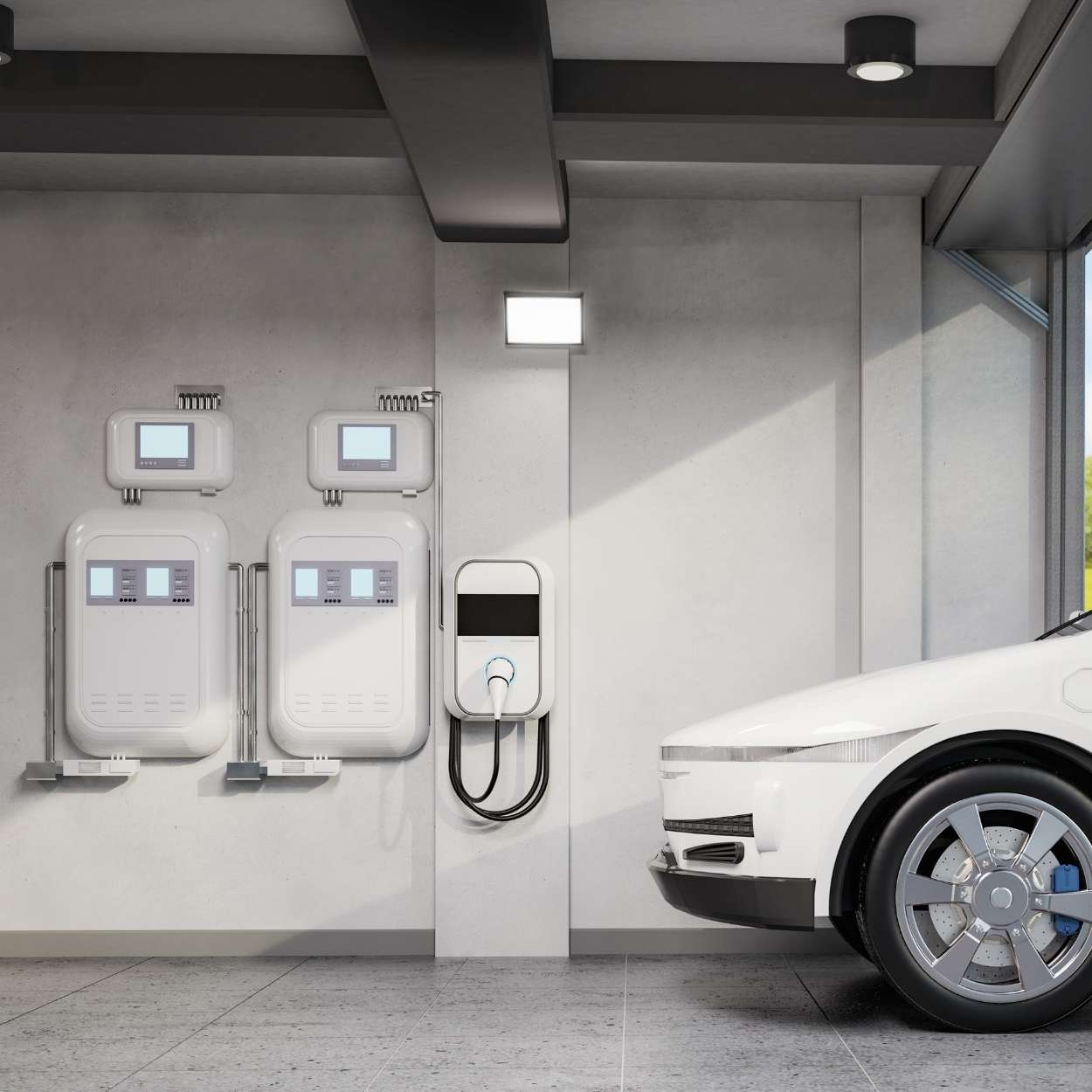
In 2026, the U.S. EV market has moved past early adopters. We are now in the “Mass Infrastructure Phase.” Federal programs like NEVI have allocated billions to ensure that fast chargers are as common as gas stations. For a startup, this means you can build a million-dollar site while the government pays for 80% of it.
To scale to a $1.2 million annual revenue, your target shouldn’t be just individual drivers—it should be the “High-Utilization” users: autonomous taxi fleets, delivery vans, and long-haul travelers.
1. How to Secure NEVI Funding for EV Charging Stations
The NEVI Formula Program is the single greatest wealth-creation tool for EV startups today. It provides funding for up to 80% of eligible project costs, including hardware, installation, and even five years of maintenance.
The 2026 Eligibility Checklist:
- Alternative Fuel Corridors (AFC): Your site must be within 1 travel mile of a designated highway corridor.
- The Power Minimum: Each site must have at least four 150 kW DC Fast Chargers (600 kW total) that can charge four cars simultaneously.
- Open Access: You cannot lock your chargers behind a membership. They must accept credit cards, mobile wallets, and the Plug & Charge (ISO 15118) standard.
- Data Sharing: You must agree to share real-time data on price and availability with the Joint Office of Energy and Transportation.
How to Apply: States release “Requests for Proposals” (RFPs) in waves. By 2026, most states are in Round 3 or Round 4. You apply through your state’s Department of Transportation (DOT) with a site plan and a utility “will-serve” letter.
2. Real-World Math: Scaling to $1.2 Million (1 Crore)
Let’s talk numbers. In the US market, “revenue” is a combination of electricity sales, session fees, and government subsidies.
What are key costs to scale EV charging to 1 crore revenue?
- Capital Expenditure (CAPEX): A standard 4-charger hub (150kW each) costs roughly $1,000,000 all-in.
- With NEVI: You pay $200,000. The grant pays $800,000.
- Operating Expenditure (OPEX): Expect to pay $1,500 – $2,500 per month per site for network fees, insurance, and minor repairs.
The Monthly Revenue Stack
To reach $100,000/month ($1.2M/year), you need a network of approximately 4 to 5 sites.
- Usage Revenue: At $0.48 per kWh (2026 average), a busy charger moving 300 kWh/day makes $144/day.
- Daily Site Revenue (4 chargers): $576/day = $17,280/month.
- Scale: 6 high-traffic sites = $103,680/month.
3. Hardware Choice: NACS Connector Suppliers for Charging Stations
In 2026, the North American Charging Standard (NACS), now formalized as SAE J3400, is the mandatory plug for the US. If your chargers only have CCS1 plugs, your revenue will drop by 60% as newer EVs switch to the NACS inlet.
Where to Buy:
- ABB E-mobility: Their Terra 184 units are NEVI-compliant and offer liquid-cooled NACS cables.
- SK Signet: A leader in ultra-fast 350kW+ dispensers that are “Buy America” compliant.
- Tesla (Commercial): Tesla now sells its “Supercharger V4” pedestals to third-party operators.
- Phoenix Contact: A top tier-1 supplier for NACS cable assemblies if you are building your own hardware.
4. The 97% Mandate: Strategies for 97% Uptime in EV Chargers
Uptime is no longer a “goal”; it is a federal law. If your NEVI-funded charger stays broken for more than a few days, you risk losing your maintenance subsidies.
Strategies for Success:
- Modular DC Power: Buy chargers with “swappable power modules.” If one 50kW module fails, the charger stays active at 100kW instead of shutting down.
- Predictive Maintenance AI: Use software like Driivz or AMPECO that detects “voltage jitter” or temperature spikes before the hardware actually fails.
- The 24-Hour Rule: Partner with local certified electricians (EVITP certified) to guarantee a 24-hour “truck roll” for physical repairs.
5. EV Charging Business Models for Underserved Areas
While everyone fights for Los Angeles and New York, the real “Blue Ocean” is in Underserved and Rural Areas. The Justice40 Initiative mandates that 40% of federal benefits flow to these communities.
Model A: The “Fleet Anchor” Hub In a rural town, your charger might not get enough public traffic. The Fix: Partner with a local school district (electric buses) or the USPS (electric vans). They use your chargers at night (guaranteed revenue), and the public uses them during the day (bonus profit).
Model B: Retail-Energy Hybrid Build your chargers at a rural “General Store” or a popular diner. In these “charging deserts,” you can charge a premium (up to $0.65/kWh) because you are the only high-speed option for 50 miles.