Running an office or commercial space comes with plenty of hidden expenses, and energy waste is one of the biggest. Whether you manage your own building or work with an electrical contractor to keep systems efficient, small inefficiencies can add up to big business energy bills over time.
The good news?
With the right strategies, you can achieve business energy savings without sacrificing comfort or productivity.
When Business Energy Bills Are Too High
Start by looking at patterns, not just bills. A sudden spike in monthly business energy bills without changes in operations is a red flag, but so is a bill that’s consistently higher than industry averages for your square footage. Compare your energy use per square foot against ENERGY STAR benchmarks for office buildings, and use your utility’s interval data (usually available online) to see if your peak load coincides with avoidable events, like everyone brewing coffee, turning on lights, and firing up HVAC at 8:59 AM. Many offices pay more in demand charges than in actual electricity use because systems spike at the wrong times, driving up business electricity costs unnecessarily.
Walk the space after hours, if lights, monitors, or HVAC are running in empty rooms, you’ve just spotted dollar bills floating away. Compare your “base load” (overnight usage when nobody’s there) to your peak; if it’s more than 30% of peak, you’ve got a serious phantom load issue. A thermal imaging scan, or better yet, an infrared drone, can reveal hidden losses from poor insulation, leaking ductwork, or heat escaping through walls, roof joints, and window seals. These problems may be invisible to the naked eye but can cost thousands yearly and undermine your business electricity savings.
Top Energy Wasters Blocking Business Electricity Savings
Most articles stop at “leaving lights on,” but real waste goes much further. HVAC overdrive, cooling and heating at extremes instead of maintaining steady, moderate settings, can be just as costly as misaligned zoning, where one thermostat controls rooms with very different sun exposure, forcing overcooling or overheating. Over-ventilation adds to the problem, with systems bringing in more outside air than necessary, meaning they condition more air than occupants require, further increasing business electricity costs.
Over-lighting wastes energy too, especially with outdated fluorescent fixtures producing more lumens than needed. Phantom loads, electronics pulling power even when “off,” like chargers, printers, or unused monitors, are another silent drain. Layered equipment schedules make matters worse, such as copiers auto-waking at 5 AM “just in case” or servers running non-critical processes 24/7. Neglected maintenance, including dirty filters, clogged vents, and uncalibrated thermostats, forces systems to work harder than necessary, reducing your potential business energy savings. In some older buildings, simultaneous heating and cooling is a hidden culprit, with separate systems unknowingly fighting each other. Space mismanagement compounds all of this, heating or cooling unused rooms or failing to zone systems to match actual occupancy patterns, making it harder to reduce business energy costs effectively.
Spotting Issues Raising Business Electricity Costs
Use a light meter app to measure lux levels in different zones and compare with recommended office standards (typically 300-500 lux for desk work); excess means wasted electricity and missed business electricity savings. A portable power logger can track not just wattage but actual runtime hours over a week, often revealing lights left on in unused areas more than expected.
For HVAC, track system runtime and cycles, short cycling or constant operation signals a problem. Infrared thermometers can detect temperature inconsistencies near vents, pointing to duct leaks, while a duct leakage test can confirm the issue; the average commercial system loses 20-30% of conditioned air before it reaches the vents, which inflates business electricity costs.
When it comes to equipment, use plug-in energy monitors like Kill A Watt meters to check actual power draw, inventory devices with serial numbers and energy consumption data, and sort by energy cost per productive hour. Prioritizing replacement of the top energy hogs delivers the fastest ROI, especially for equipment that costs more to run than it produces in value. This is one of the most direct ways to reduce business energy costs while boosting operational efficiency.
Upgrades to Reduce Business Energy Costs
Swapping outdated bulbs for LEDs can cut lighting costs by up to 75%, and retrofitting existing fluorescent fixtures with LED tube replacements, rather than full fixture swaps, reduces both cost and downtime by up to 70%. Even small changes, like upgrading exit signs to LED, can add up, with each saving $40+ a year when running 24/7. Using task lighting lets employees rely less on overhead fixtures, while adjusting blinds and shades strategically reduces both lighting needs and HVAC load, maximizing business energy savings.
For hidden power drains, smart plugs or plug-load controllers can automatically cut phantom loads after work hours, shutting down desk clusters or printer banks without relying on employees to unplug. Reprogramming thermostats to match real occupancy patterns ensures you’re not cooling an empty office on weekends, and re-sequencing HVAC startup so heavy-load equipment powers on in stages can lower costly demand charges and further reduce business energy costs.
Smart Tech That Cuts Business Energy Bills
Smart systems don’t just react, they learn. A smart thermostat can detect when rooms are empty and adjust temperatures automatically, cutting HVAC costs by 10-15% and helping with business electricity savings. Smart lighting can dim based on daylight or occupancy sensors, while connected plugs schedule equipment shutdowns and use analytics to identify devices wasting the most standby power, then create usage rules automatically.
Cloud-based energy management platforms go further, analyzing trends and sending alerts when usage spikes unexpectedly, so small problems can be fixed before they become expensive business electricity costs. Automated demand response can pre-cool or pre-heat spaces before utility peak pricing hours and then let systems coast, while occupancy-based ventilation uses CO₂ sensors to adjust airflow in real time, eliminating the waste of conditioning air for three people in a room built for twenty and adding measurable business energy savings.
Habits That Improve Business Energy Savings
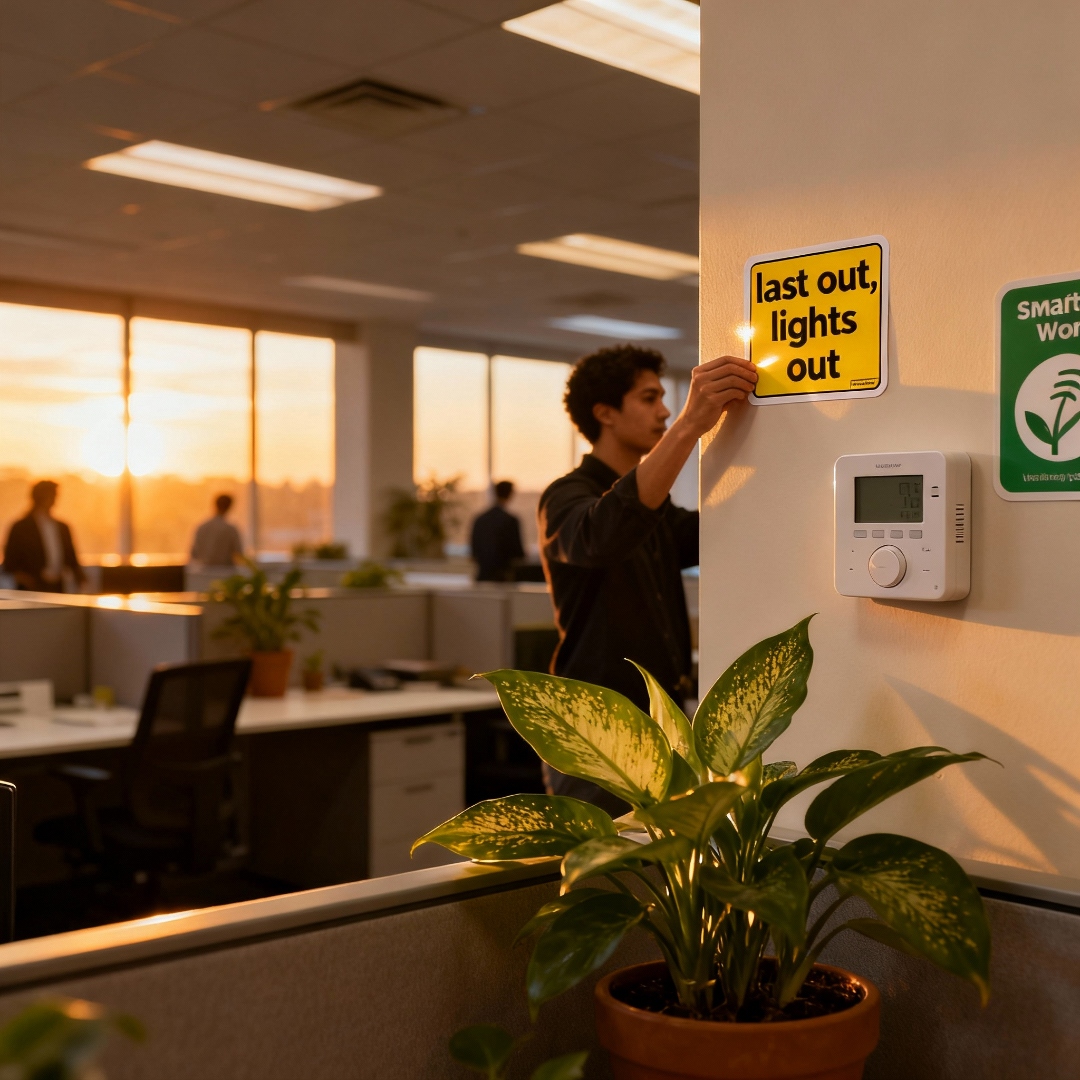
A “last out, lights out” rule, reinforced with visible reminder stickers, helps keep business electricity savings in check, while personal responsibility zones assign someone to check equipment in their area before leaving. Unplug-and-go Fridays encourage staff to fully shut down devices before the weekend, and remote-friendly workdays mean fewer people on-site, reducing lighting, HVAC, and equipment use, which directly lowers business energy bills. Rotation days take this further, staggering remote schedules so entire floors can be shut down.
Recognition programs can publicly thank and reward teams that consistently cut waste, while energy “no-fly zones” label plugs or circuits off-limits for personal appliances like mini-fridges or space heaters. Reverse incentives make the energy budget visible, every wasted kilowatt-hour comes out of the “treats” fund for coffee and snacks, giving employees a direct stake in reducing business energy costs.
Measuring Business Electricity Savings Over Time
Start with the annual cost reduction by calculating current usage (kWh) × utility rate, then estimating the percentage reduction from the upgrade using manufacturer data or ENERGY STAR calculators. Multiply the yearly savings by the expected lifespan of the upgrade to get total lifetime business electricity savings. For example, current lighting using 50,000 kWh/year at $0.12/kWh costs $6,000 annually; an LED upgrade cutting usage by 60% saves $3,600/year, and over a 10-year lifespan, that’s $36,000 plus reduced maintenance costs.
Think like an investor by calculating avoided costs, including reduced maintenance, longer equipment life, and lower insurance premiums from reduced fire risk. Factor in utility incentives and tax credits, which can often cut payback time in half. Discount future savings to today’s value using a simple net present value (NPV) formula, and don’t forget non-energy benefits like improved comfort, productivity, and sustainability reputation, these can add real but often overlooked value while helping you reduce business energy costs year after year.
Kickstart your business growth with Startup Pill!
Discover actionable energy-saving tips, innovative solutions, and expert guidance to power your startup toward bigger profits and a sustainable future. Get your energy-smart edge today!